Boiler Repair in the Niagara Region
Repair and service for residential boilers and hydronic heating systems, including radiators, baseboards, and in-floor heat.
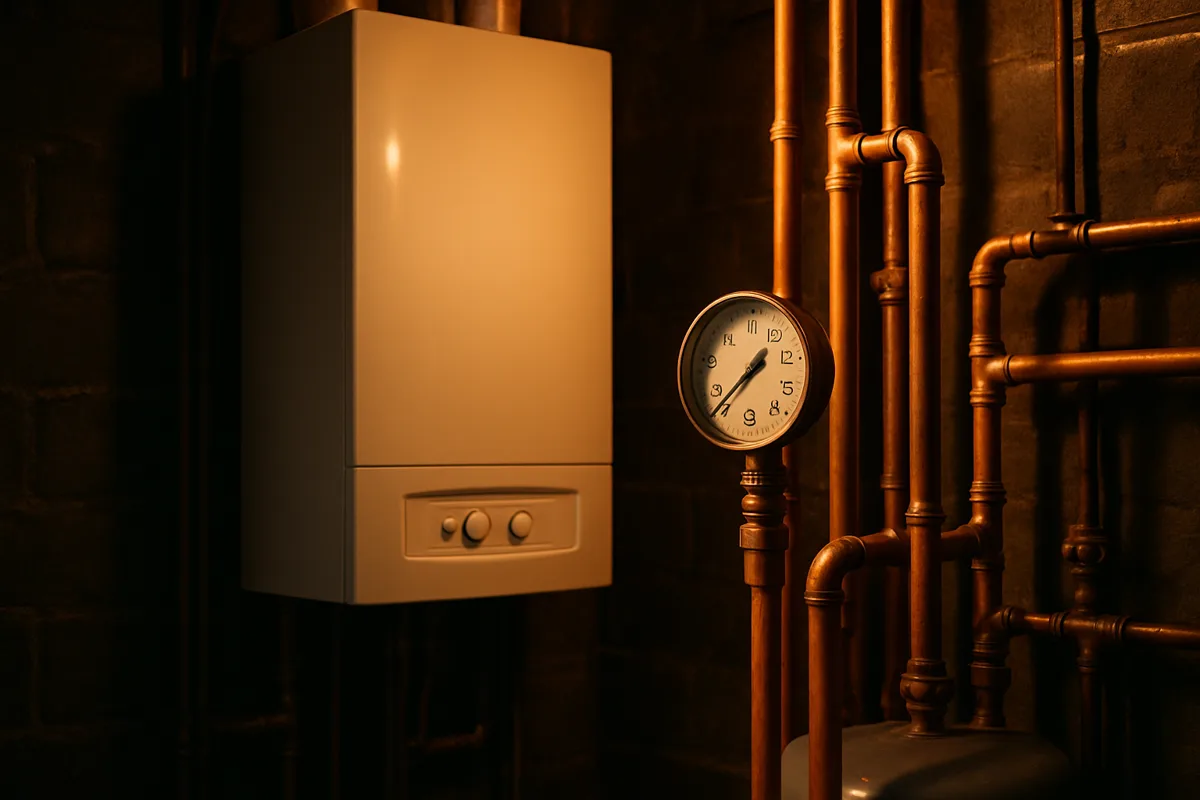
Boiler Repair for Niagara’s Radiator Houses
Walk into a pre-war house in Old Glenridge, along Front Street in Thorold, or on the tree-lined blocks of Welland’s older core, and there is a good chance you will find cast iron radiators under the windows and a boiler in the basement instead of a furnace and ductwork. These systems are quiet, comfortable and often older than anyone living in the house. They are also completely different to diagnose. A cold radiator is not the same problem as a cold register, and a technician who only knows forced air will guess.
Furnace Repair Niagara services residential boilers and the hydronic systems they feed: cast iron radiators, hot water baseboards, in-floor radiant loops, and the combination boilers in newer homes that heat both the house and the domestic hot water. We work across St. Catharines, Niagara Falls, Welland, Fort Erie and Thorold, seven days a week, with an upfront quote before any repair starts.
Signs Your Boiler Needs Repair
Boilers give warning. Here is what to watch and listen for.
Radiators cold, or hot at the bottom and cold at the top
Air in the system is the usual reason. Bleeding each radiator from its valve is a reasonable thing to try yourself. If the same radiators go cold again within days, the system is taking in air somewhere, or the automatic air vent has failed, and that needs a technician.
One zone or one floor is cold
A stuck zone valve or a failed circulator pump on that loop. On older gravity-converted systems it can also be sludge blocking a return line.
The pressure gauge is wrong
Near zero means the system has lost water and the boiler may have shut down on its low-pressure safety. Creeping toward the relief valve setting, usually 30 psi, with water dripping from the relief pipe means the expansion tank has waterlogged or failed.
Banging, kettling, or gurgling
A rumbling like a kettle coming to boil is scale on the heat exchanger. Loud bangs in the pipes on a steam system are water hammer from condensate pooling. Gurgling is air. None of them should be ignored for a season.
Burner will not stay lit, or short-cycles
A dirty flame sensor, a failing thermocouple on an older standing-pilot boiler, a blocked flue, or a limit control tripping. Repeated ignition failures need a licensed technician with a combustion analyzer.
Water on the floor
A drip from a fitting or relief valve is a warning. Water from the boiler body itself usually means a cracked section or heat exchanger, and the boiler should be shut off until it is inspected.
Repair or Replace: Boilers Are a Different Calculation
Cast iron boilers regularly run 30 years and beyond, which changes the math compared to a furnace.
- Under 15 years. Repair. Circulators, zone valves, expansion tanks, gas valves and ignition parts are all routine.
- 15 to 25 years. Usually repair, unless the needed part is no longer made. Many boilers in this range still have decades in them with an annual service.
- 25 years and up, or a cracked section. Replacement becomes the sensible option. A modern condensing boiler runs at much higher efficiency than a 1980s atmospheric unit, and a cracked cast iron section is rarely worth the cost of repair.
- Steam systems. Kept running as long as possible, since converting to hot water or forced air is a major project. When a steam boiler does fail, the replacement is a like-for-like steam boiler.
We show you both numbers. If the boiler should be kept, we say so. If the money is better spent on a new one, we say that instead.
How a Boiler Repair Visit Works
- You call and describe the system. Radiators or baseboards, hot water or steam, boiler age if known, what it is doing. That determines the parts on the truck.
- System inspection. Boiler, burner, controls, pressure, expansion tank, circulator, zone valves, air vents, relief valve, venting and a sample of the radiators.
- Diagnosis and upfront quote. The actual fault, explained plainly, with a price before the work starts.
- Repair. Most single-component faults are fixed the same day. Anything to be ordered comes with a timeline.
- Fill, purge and test. The system is refilled to correct pressure, air purged from every loop, and run through a full heating cycle while we check that every radiator gets hot.
- Combustion and safety check. Flue draft, CO levels, relief valve function. A written record follows.
What Good Boiler Repair Does for an Old House
- Even heat. A balanced, purged system heats every room, including the far bedroom that has been cold for years.
- Quiet. The banging and kettling stop when the cause is fixed rather than tolerated.
- Lower gas use. Correct pressure, a clean burner and a working expansion tank mean fewer cycles and less wasted heat.
- A longer life for a system worth keeping. Original radiators and well-maintained cast iron boilers outlast anything sold today.
- Safety. Old boilers venting into old chimneys need their draft and combustion checked. This is where CO problems in century homes begin.
What Affects the Cost of Boiler Repair
- The part. An air vent or thermocouple is inexpensive. A circulator, zone valve, expansion tank or gas valve costs more. A control board on a condensing boiler costs more again.
- System type. Steam boilers and multi-zone hydronic systems take longer to diagnose than a single-loop baseboard system.
- Boiler age and brand. Parts for very old or discontinued boilers may need sourcing.
- Access and piping. Old systems with corroded fittings and inaccessible valves take more time.
- How much purging is needed. A large radiator system with air throughout can take a while to balance.
Request a quote if you would like an estimate before booking.
What Niagara Boiler Repair Has to Account For
Boilers here live in a specific kind of house, in a specific climate, and the repair work reflects both.
Where the boilers are
Hot water heating was the premium system when Niagara’s older neighbourhoods were built. Old Glenridge, the Yates Street area and parts of Port Dalhousie in St. Catharines; the pre-war streets around Queen Street and the Victoria Avenue corridor in Niagara Falls; Welland’s older core near the original canal alignment; Old Thorold along Front and Ormond; and Bridgeburg in Fort Erie all have a share of radiator houses. Many still run on the original cast iron radiators with a boiler that has been replaced once or twice since.
Lake-effect cold snaps and freeze-thaw
Mild Niagara winters lull hydronic systems into running at low fire for weeks. Then a Lake Erie cold snap arrives, the boiler runs flat out, and the weak points show: a marginal circulator, a tired expansion tank, a relief valve that starts to weep under sustained pressure. Systems with pipes running through unheated porches or additions can also freeze during the deep cold, and a frozen hydronic pipe splits.
Condensing boilers and condensate
Modern high-efficiency boilers produce acidic condensate that must drain through a neutralizer and a line that stays above freezing. Like condensing furnaces, they lock out when the drain freezes or the PVC venting ices over in a squall. We check both on every call.
Natural gas and TSSA licensing
Boilers here run on natural gas from Enbridge Gas. Any work on the burner, gas valve or gas piping must be done by a TSSA-licensed gas technician in Ontario. A G2 licence is the standard for unsupervised residential work. Ask to see it.
Chimneys and carbon monoxide
Older atmospheric boilers vent through masonry chimneys that may have deteriorated liners or, after a water heater was replaced with a power-vented model, may be oversized for the boiler alone. Poor draft means spillage, and spillage means carbon monoxide. Ontario’s CO alarm law requires working alarms near sleeping areas in any home with a fuel-burning appliance. We test draft and CO on every visit.
Old radiators, old pipes
Century-home hydronic systems accumulate sludge and scale. Valves seize. Union fittings that have not been turned in 40 years crack when they are. Good boiler repair in Niagara means knowing when to work around an old fitting and when to replace it, and carrying the odd sizes that old systems use.
Sizing
Drafty pre-war homes were often given large boilers. When a replacement conversation starts, a proper heat-loss calculation matters. An oversized condensing boiler short-cycles and never reaches the low return temperatures it needs to actually condense.
Permits and Documentation
Like-for-like boiler repairs do not require a permit. Boiler replacement, venting changes and gas piping changes are code work that must be done and tagged by a licensed technician. We leave a written record of every visit: system pressure, parts replaced, combustion readings and anything to watch. Keep it with the house’s records; it matters at resale and for any warranty claim.
Get Your Radiators Hot Again
If your boiler has lost pressure, the radiators are cold, or you can hear it kettling from upstairs, call (289) 271-2879. We take same-day no-heat calls for boilers seven days a week across St. Catharines, Niagara Falls, Welland, Fort Erie and Thorold. Not urgent? Request a free estimate and we will book an annual boiler service, or a furnace maintenance visit if the house has both.
How It Works
Call and Triage
Call or send the form and tell us what your furnace is doing. We ask a few quick questions to gauge urgency, and no-heat calls in winter go to the front of the line for same-day service.
Diagnose With an Upfront Quote
A technician inspects your furnace, finds the actual fault, and explains it in plain language. You get an upfront quote for the repair before any work starts, so there are no surprises.
Repair
Once you approve the quote, the repair gets done, usually in the same visit. Common parts for popular furnace brands are stocked on the truck to keep return trips to a minimum.
Safety Check and Tune-Up Advice
After the repair, the furnace is tested through a full heating cycle and checked for safe operation. You also get honest advice on maintenance and whether a tune-up or replacement makes sense down the road.
Frequently Asked Questions
What are the signs my boiler needs repair?
Watch for radiators that stay cold or heat unevenly, banging or gurgling noises, pressure that keeps dropping, visible leaks around the boiler or piping, or a pilot or burner that will not stay lit. Any of these is worth a service visit before it becomes a no-heat situation.
Why are some of my radiators cold?
Trapped air is the most common cause, and bleeding the radiators often fixes it. If bleeding does not help, the problem may be a failing circulator pump, a stuck zone valve, or sludge buildup in the system, all of which a technician can diagnose and repair.
Do you service older boilers found in Niagara century homes?
Yes. Many homes in St. Catharines, Welland and Thorold still run on hot water heating, and we service both older cast iron systems and modern high-efficiency condensing boilers. If parts for a very old unit are no longer available, we tell you honestly and walk through the options.
How often should a boiler be serviced?
Annually, just like a furnace. A yearly service checks combustion, venting, system pressure, the expansion tank and safety controls, and keeps the system efficient. In Ontario, work on the gas side of a boiler must be done by a licensed gas technician.
What pressure should my boiler run at?
Most residential hot water boilers sit around 12 to 15 psi when cold and rise a few psi as the water heats. If the gauge reads near zero, the system has lost water and the boiler may shut down on low pressure. If it keeps climbing toward 30 psi and the relief valve drips, the expansion tank has likely failed. Either one is a service call.
Is a leaking boiler an emergency?
A small drip from a relief valve or a fitting is not usually dangerous but should be looked at within a day or two, because it means the system is losing water or over-pressurizing. Water pouring from the boiler body itself usually means a cracked section or heat exchanger, and the boiler should be shut off until a technician sees it.
Can you repair the boiler in a house with steam radiators?
A small number of older Niagara homes still have steam systems rather than hot water, with a single large pipe to each radiator and an air vent on the side. Tell us when you call. Steam boilers have different controls, including a low-water cutoff and pressuretrol, and the technician needs to know which system to bring parts for.
Should I replace my old cast iron boiler with a high-efficiency one?
If the boiler is 25 years or older, parts are scarce, or it needs a major repair such as a cracked section, a condensing boiler will cut gas use and may qualify for utility rebates. If it is running well and the repair is minor, keep it. Cast iron boilers are famously long-lived, and we will give you both numbers so you can decide.