Furnace Repair in the Niagara Region
Fast diagnosis and repair for furnaces that will not start, blow cold air, or keep shutting off, with an upfront quote before any work begins.
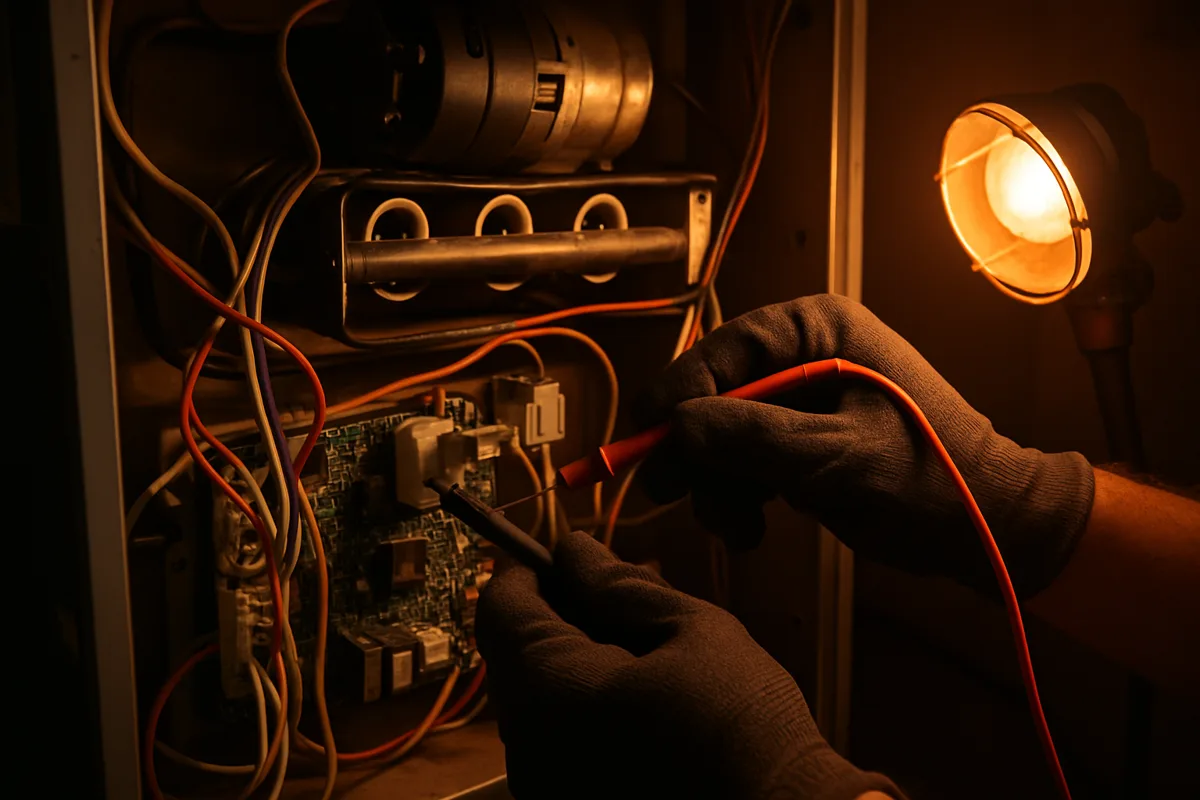
Furnace Repair for Niagara Homes That Cannot Wait for Spring
It is usually the same story. The house felt a little cool overnight, the thermostat is asking for heat, and the furnace in the basement is either silent, clicking without lighting, or running and pushing air that is not warm. In St. Catharines, Niagara Falls, Welland, Fort Erie and Thorold that scene tends to play out on the first real cold snap of the season, when Arctic air drops in behind a Lake Erie snow squall and every furnace in the region gets asked to work harder than it has since March.
Furnace Repair Niagara handles exactly that call. We diagnose natural gas furnaces of every age and efficiency, explain what actually failed in plain language, and quote the repair before we touch a part. If you have no heat right now, our emergency furnace repair service puts you at the front of the line. If the problem is more of a nuisance than a crisis, keep reading and we will help you figure out what you are dealing with.
Signs Your Furnace Needs Repair
A furnace rarely dies without warning. It leaves clues for weeks, and most of them are easy to spot once you know what to listen for.
It runs but the air is cool
Cold air from the registers while the blower runs usually means the burners are not lighting or are shutting down early. A dirty flame sensor, a failed hot-surface igniter, or a limit switch tripping from restricted airflow are the usual causes. Check the filter first. If it is grey and clogged, change it and let the furnace cool before restarting. If the air is still cool, it is time to call.
It starts, stops, and starts again
Short-cycling wears out igniters and blower motors fast and inflates your Enbridge bill. Sometimes the cause is as simple as a thermostat mounted above a heat register. More often it is an overheating furnace protecting itself, or an oversized unit that satisfies the thermostat too quickly. We see the oversizing problem a lot in Niagara bungalows where a big furnace was installed decades ago on a rule of thumb rather than a heat-loss calculation.
New noises
Squealing points to a belt or blower bearing. A bang or whump at ignition often means delayed ignition from dirty burners, which is a safety concern rather than a quirk. Rattling can be a loose panel or a cracked heat exchanger. Any noise that appeared recently deserves a look.
The furnace will not start at all
Confirm the thermostat is on HEAT, the furnace power switch (it looks like a light switch, usually on or near the unit) is on, and the breaker has not tripped. Check that the condensate line has not frozen on a high-efficiency model. If all of that checks out, the fault is usually electrical or in the control board, and it needs a technician with a meter.
Your CO alarm is chirping or sounding
Treat this as an emergency. Get everyone outside, call 911 from outside, and do not restart the furnace until it has been checked. Ontario law requires working carbon monoxide alarms near sleeping areas in any home with a fuel-burning appliance, and a furnace is the most common one.
Repair or Replace: The Honest Version
Nobody wants to hear that a furnace is done, and we do not say it unless the numbers back it up. The trade-off comes down to age, the cost of the specific repair, and how the furnace has been treated.
- Under 10 years old. Repair, almost always. Many components are still under manufacturer parts warranty if the furnace was registered and has been maintained.
- 10 to 15 years old. Repair if the fault is a single part such as an igniter, capacitor, flame sensor, pressure switch, or inducer motor. Start thinking about replacement if the heat exchanger, control board and blower motor are all showing their age at once.
- 15 years and up. The 50 percent rule is a reasonable guide: if the repair costs more than half of a replacement, put the money toward a new furnace. A cracked heat exchanger on a furnace this age is almost always a replacement.
- Mid-efficiency and older. The 80 percent furnaces installed through the 1990s and early 2000s across Niagara are reaching the end of the road. Parts are getting harder to source, and every winter they run costs more in gas than a modern condensing furnace would.
We give you both numbers, the repair and a replacement estimate, and let you decide. If you want the furnace to last, an annual furnace maintenance visit is the single cheapest thing you can do for it.
How a Furnace Repair Visit Works
- You call, we ask a few questions. Furnace age if you know it, what it is doing, whether you smell anything, and whether anyone in the home is vulnerable to cold. That determines how quickly we roll and what parts go on the truck.
- The technician arrives and inspects the whole system. Thermostat, filter, blower, burners, igniter, flame sensor, pressure switches, venting, gas pressure and the heat exchanger. Not just the part you think failed.
- You get a diagnosis and an upfront quote. In plain language, with a price for the repair. You approve it before any work starts.
- The repair is completed. Common parts are on the truck. Anything that needs ordering comes with a timeline.
- Full heating cycle test and safety check. The furnace is run through ignition, steady-state heating and shutdown. We confirm combustion is clean, the venting is drawing properly, and there are no CO concerns before we leave.
- A written record. What failed, what was replaced, and anything else worth watching. Useful for warranty claims and for whoever services the furnace next.
Why Fix It Now Rather Than Limp Through Winter
- A struggling furnace costs more to run. Dirty burners, weak airflow and a furnace that short-cycles all burn more gas for the same heat.
- Small faults cascade. A flame sensor that keeps dropping out makes the igniter cycle constantly, and igniters are not built for that. One cheap part becomes two.
- Safety. A delayed-ignition bang, a heat exchanger crack, or a blocked vent are the kinds of problems that turn into carbon monoxide risks. A repair visit doubles as a safety inspection.
- Frozen pipes. A house at minus 20 with no heat starts freezing plumbing in a matter of hours, especially in older homes with pipes in exterior walls.
- Winter scheduling. After the first big cold snap the whole region’s service calendar fills up. A furnace repaired in November is a furnace you do not have to think about in January.
What Affects the Cost of a Furnace Repair
Every repair is quoted on the specific fault, but the same factors move the price up or down:
- The part itself. A flame sensor or capacitor is inexpensive. A control board, inducer motor, ECM blower motor or gas valve costs considerably more.
- Furnace age and brand. Parts for a 20-year-old furnace can be scarce, and some brands price their proprietary parts high.
- Access. A furnace in a tight crawlspace under a Port Dalhousie cottage or wedged behind a finished basement wall takes longer than one standing in the open.
- Whether the fault caused other damage. A frozen condensate trap that flooded the control board is two repairs, not one.
- Timing. Same-day and after-hours calls are quoted the same way as any other visit, with the price agreed before work starts. Book a free estimate if the situation is not urgent and you want the numbers first.
What Niagara Furnace Repair Has to Account For
Furnaces are furnaces, but the conditions they run in here are not the same as in Ottawa or Toronto. A few local realities shape almost every service call we make.
Lake-effect cold snaps and freeze-thaw
Niagara sits between two Great Lakes, which keeps most winters moderate and then delivers a handful of brutal stretches when Arctic air crosses Lake Erie. Fort Erie and the south end of the region take the heaviest snow squalls, while St. Catharines along Lake Ontario tends to stay a few degrees milder. The pattern that hurts furnaces is not the cold itself but the swings: days that hover around zero, melt, then refreeze. Condensate lines that were fine at minus 5 freeze solid at minus 18, and vent terminations that drip during a thaw grow ice during the refreeze.
High-efficiency condensing furnaces and frozen drains
Most furnaces installed in the last 15 years are condensing units that produce water as they run. That water has to drain, and the PVC intake and exhaust have to stay clear. Our winter no-heat calls are full of frozen condensate lines run through unheated garages or along cold foundation walls, drains that terminate outside, and intake pipes buried by a plow drift or capped with hoar frost after a squall. Proper slope back to the furnace, keeping the drain inside the heated envelope, and vent terminations well above snow grade prevent most of it.
Mid-efficiency and gravity systems in century homes
Old Thorold around Front Street, the canal-era streets of Merritton, Bridgeburg in Fort Erie, and the pre-war blocks of downtown Niagara Falls and Welland still hold plenty of mid-efficiency furnaces venting up masonry chimneys, and the occasional converted gravity furnace with its octopus of ductwork. These systems can be kept running, but they need a technician who understands draft hoods, chimney liners and spillage testing rather than just PVC and pressure switches.
Natural gas from Enbridge and TSSA licensing
Nearly every furnace in the region runs on natural gas delivered by Enbridge Gas, the successor to Union Gas, which was founded in Niagara Falls. In Ontario, any work on the gas side of a furnace must be done by a gas technician licensed through the Technical Standards and Safety Authority. A G2 licence covers residential appliances and is the standard for unsupervised home service; a G3 is the entry level and works under supervision. Ask whoever comes to your door to show their card. Ours will.
Carbon monoxide and Ontario’s alarm law
Ontario’s Hawkins-Gignac Act made carbon monoxide alarms mandatory in homes with fuel-burning appliances, with alarms required adjacent to each sleeping area. Every furnace repair we complete ends with a combustion check for this reason. If your home does not have working CO alarms, that is the first thing to fix, before the furnace.
Boilers and radiators in older housing
A meaningful share of the pre-1950 homes in St. Catharines, Niagara Falls and Welland heat with hot water instead of forced air. If your basement holds a boiler and your rooms have cast iron radiators, you want our boiler repair page instead. The diagnostics are different and so are the parts.
Sizing for drafty pre-war homes
Old Niagara houses with balloon framing, original single-pane windows and little insulation lose heat fast. Furnaces in these homes were often oversized to compensate, which causes short-cycling and uneven rooms. When a repair conversation turns into a replacement conversation, a proper heat-loss calculation matters more here than anywhere else in the region.
Permits, Code and Documentation
Repairing a furnace with like-for-like parts does not require a permit in Ontario. Replacing a furnace, changing venting, or relocating gas piping does involve code requirements under the Ontario gas code, and the work must be done by a licensed technician who tags the installation. We leave you with a written service record after every visit that lists what was found, what was replaced, and any safety observations. Keep it with your furnace paperwork; manufacturers ask for maintenance and repair history on warranty claims, and home buyers ask for it at resale.
Get the Heat Back On Today
A furnace that quit at 6 a.m. in Welland does not care that it is a Sunday, and neither do we. We are open seven days a week from 7 a.m. to 9 p.m. across St. Catharines, Niagara Falls, Welland, Fort Erie and Thorold. Call (289) 271-2879 for a same-day no-heat call, or request a free estimate if the furnace is limping along and you want an honest opinion before it fails for real.
How It Works
Call and Triage
Call or send the form and tell us what your furnace is doing. We ask a few quick questions to gauge urgency, and no-heat calls in winter go to the front of the line for same-day service.
Diagnose With an Upfront Quote
A technician inspects your furnace, finds the actual fault, and explains it in plain language. You get an upfront quote for the repair before any work starts, so there are no surprises.
Repair
Once you approve the quote, the repair gets done, usually in the same visit. Common parts for popular furnace brands are stocked on the truck to keep return trips to a minimum.
Safety Check and Tune-Up Advice
After the repair, the furnace is tested through a full heating cycle and checked for safe operation. You also get honest advice on maintenance and whether a tune-up or replacement makes sense down the road.
Frequently Asked Questions
Why is my furnace blowing cold air?
The most common causes are a thermostat fan set to ON instead of AUTO, a clogged filter making the furnace overheat and shut down its burners, a failed igniter or flame sensor, or a problem with the gas supply. Some of these are simple fixes you can try yourself, but if a filter change and a restart do not solve it, a technician should diagnose the fault.
Should I repair my furnace or replace it?
A useful rule of thumb: if the furnace is 15 years or older and the repair would cost more than half the price of a new unit, replacement is usually the smarter investment. For newer furnaces or smaller repairs, fixing it almost always makes more sense. We explain both options with an upfront quote so you can decide.
Why does my furnace keep turning on and off?
Short-cycling is often caused by a dirty filter or blocked airflow overheating the furnace, a faulty flame sensor shutting the burners down, a bad thermostat location or setting, or a furnace that is oversized for the home. It wastes fuel and wears parts quickly, so it is worth diagnosing early rather than living with it.
What should I do if I suspect a carbon monoxide problem?
If your carbon monoxide alarm sounds, or anyone in the home feels dizzy, nauseous or unusually drowsy, get everyone outside into fresh air first and call 911 from outside. Do not run the furnace again until it has been inspected. A cracked heat exchanger or venting problem is a serious safety issue, and every repair visit we make includes a safety check.
What should I expect from a furnace service call in Ontario?
A typical visit starts with a diagnostic fee that covers the technician finding the actual fault. You should then get a clear explanation of the problem and a written or stated price for the repair before any work begins. Reputable companies in Ontario quote upfront and let you approve the price first, which is exactly how we operate.
Does a gas furnace need an annual licensed inspection?
Ontario does not require homeowners to book an annual inspection by law, but manufacturers and the Technical Standards and Safety Authority (TSSA) recommend yearly maintenance, and many warranties depend on it. Keep in mind that any work on the gas side of a furnace must be done by a licensed gas technician in Ontario, so an annual tune-up is also your safety check.
My high-efficiency furnace stopped on a very cold morning. What happened?
On the coldest Niagara mornings the usual suspects are a frozen condensate line, or ice and frost building up on the PVC intake or exhaust pipe outside the house. Either one trips a safety switch and the furnace locks out. Clearing snow from the vent terminations is safe to try; anything involving the drain trap or pressure switch should be left to a technician.
How long does a furnace repair take?
Most repairs are finished in a single visit, often within an hour or two once the fault is confirmed. Common parts such as igniters, flame sensors, capacitors and pressure switches are usually carried on the truck. If a less common part such as a control board or inducer motor has to be ordered, we tell you the expected timeline before you commit to anything.