Furnace Maintenance and Tune-Ups in the Niagara Region
Annual furnace tune-ups that catch small problems early, improve efficiency, and extend the life of your heating system.
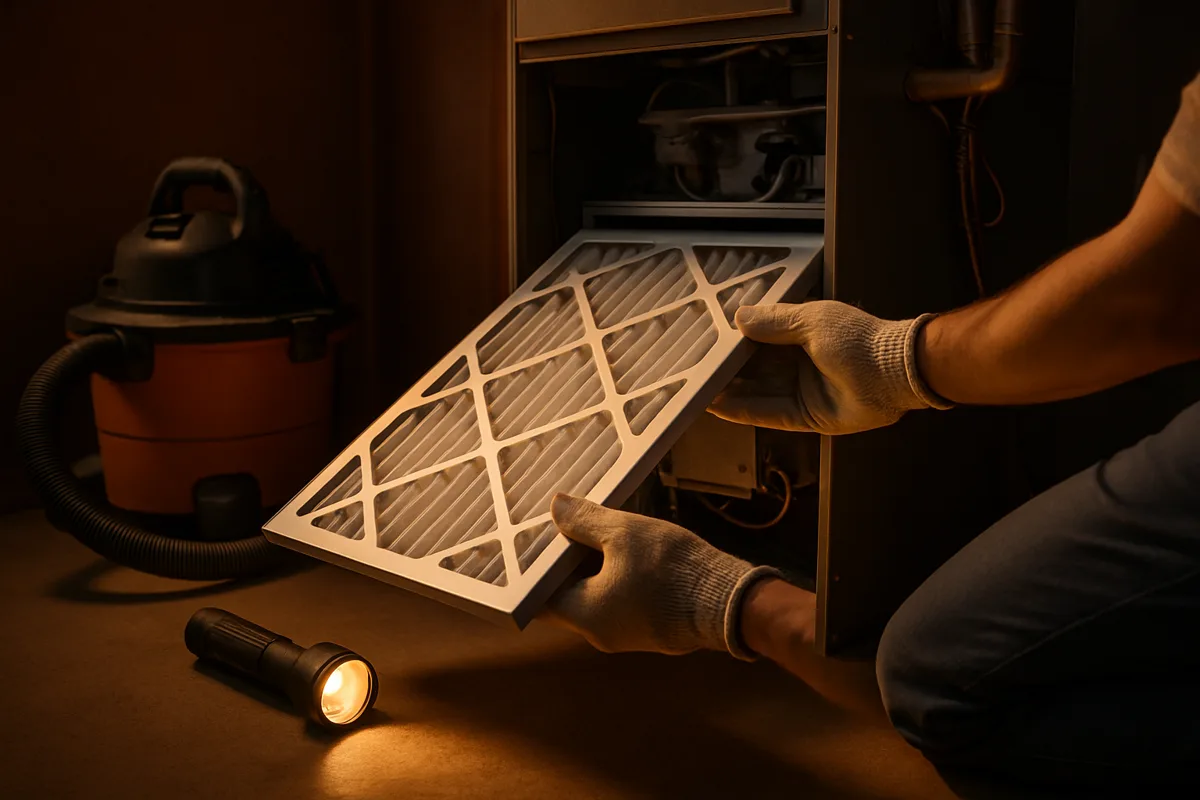
Furnace Maintenance in Niagara: Fix It in October, Not January
The furnace that fails on the coldest night in February almost always gave a warning in the fall. A flame sensor that took an extra second to prove, an igniter drawing a little more current than it should, a condensate line routed through the garage that was never going to survive minus 18. None of those things announce themselves. They wait for the first Lake Erie squall.
Furnace Repair Niagara’s annual tune-up is built to find them first. It is a full inspection, cleaning and test of a natural gas furnace by a licensed gas technician, done in the shoulder season when the schedule is open and the stakes are low. We serve homes across St. Catharines, Niagara Falls, Welland, Fort Erie and Thorold, and the visit ends with a plain-language report on what we found and what, if anything, needs attention before winter.
Signs Your Furnace Is Overdue for Service
Most furnaces we tune up have not been looked at in three or more years. Here is how you can tell yours is one of them.
You cannot remember the last time
If there is no service sticker on the furnace cabinet, or the last date on it is more than a year old, book one. Manufacturers and the Technical Standards and Safety Authority both recommend annual service on gas heating appliances.
The filter has not been changed since spring
A furnace filter that spent the summer catching air-conditioning dust is not ready for six months of heating. Restricted airflow overheats the heat exchanger and trips the limit switch. It is the single most common cause of the “runs but blows cool air” call.
The furnace has gotten louder
Bearings, belts and blower wheels wear gradually. By the time you notice the noise, they have been degrading for a while.
Your gas bills climbed without a rate change
Dirty burners and a blower running at the wrong speed both cost you gas. So does short-cycling.
The furnace is under warranty
Most manufacturer parts warranties require documented annual maintenance. Skipping it can leave you paying for a control board that should have been covered.
Tune-Up Versus Repair: What Each One Is For
Maintenance is not a repair, and it is not a magic reset. The distinction matters when you are deciding what to book.
- A tune-up is preventive. Cleaning, inspection, testing and adjustment on a furnace that is currently working. If we find a failing part during the visit, we quote it separately and you decide.
- A furnace repair is for a furnace with a known fault: no heat, cold air, short-cycling, noises.
- An emergency furnace repair is a no-heat situation in cold weather. It jumps the queue.
- Boiler service is a different visit with different checks. If you have radiators, see boiler repair.
The reason to keep them separate is honesty. A tune-up on a furnace with a dying inducer motor will find the motor, but the motor is still a repair.
What Our Furnace Tune-Up Covers
Every visit follows the same checklist, whether the furnace is a two-year-old condensing unit or a 1998 mid-efficiency model.
- Thermostat and controls. Calibration, wiring, and the call-for-heat sequence.
- Filter. Inspected and replaced if you have one on hand, or we note the size for you.
- Burners. Removed or accessed, cleaned of rust and debris, inspected for even flame.
- Ignition system. Hot-surface igniter tested for resistance and cracks; flame sensor cleaned and its signal measured.
- Heat exchanger. Visual inspection for cracks and corrosion, with combustion analysis to catch what the eye cannot.
- Gas pressure and manifold. Measured and set to the manufacturer’s specification.
- Blower assembly. Wheel cleaned, motor amperage checked, capacitor tested, belt (on older units) inspected.
- Safety controls. Limit switch, rollout switches, pressure switch and door switch all tested.
- Venting and condensate. Intake and exhaust checked for slope, blockage and termination clearance. Condensate trap flushed and drain line traced for freeze risk.
- Full heating cycle. Furnace run from cold start through steady state and shutdown while temperature rise across the heat exchanger is measured.
- Carbon monoxide check. Ambient CO measured near the furnace and in the living space.
- Written report. What was done, what was measured, and anything to watch.
What You Get From Annual Maintenance
- Fewer winter breakdowns. The parts that strand people in January are the ones this checklist tests in October.
- Lower running cost. Clean burners, correct pressure, correct airflow. The furnace does the same job on less gas.
- A longer life. A furnace that runs at design conditions for 20 years is common. One that overheats every winter from a plugged filter is not.
- Warranty protection. Documented annual service keeps manufacturer parts coverage intact.
- Safety. The heat exchanger inspection and CO check are the part of the visit you will never see the value of, which is the point.
- A record for resale. Buyers and home inspectors in Niagara ask for furnace service history. A folder of yearly reports answers the question.
What Affects the Cost of Furnace Maintenance
A tune-up is a flat-rate visit for most standard residential furnaces. What can change the price:
- Furnace type. A modern condensing furnace with a condensate system and two-stage or modulating controls takes longer than a single-stage mid-efficiency unit.
- Condition. A furnace that has not been cleaned in a decade needs more time on the burners and blower than one serviced last year.
- Repairs found during the visit. Quoted separately, approved by you, never bundled in without asking.
- Access. Crawlspace furnaces and units boxed into finished basements take longer to open up.
- Filter supply. We can install a filter you provide or supply a standard size.
Request a quote if you want the number before you book.
What Niagara Furnace Maintenance Has to Account For
A tune-up checklist written for Arizona would miss most of what matters here. Ours is built around the way this region’s winters actually behave.
Lake-effect swings and freeze-thaw
Niagara sits between Lake Ontario and Lake Erie. Most of winter hovers around freezing, then a few times a season Arctic air crosses Lake Erie and drops the temperature 20 degrees in a day, often with a squall that buries the south end of the region. The furnace that ran fine at minus 3 is asked to run flat out at minus 20 with its vents under snow. Maintenance is the only time anyone checks whether it can.
Condensing furnaces and frozen condensate
Most furnaces installed here since roughly 2010 are high-efficiency condensing units. They produce water every minute they run, and that water has to drain without freezing. On every tune-up we trace the condensate line from the trap to its termination. Lines through unheated garages, along foundation walls, or out through the rim joist to a downspout are freeze risks. We also confirm the intake and exhaust PVC slopes back toward the furnace and terminates high enough above snow grade to survive a squall.
Mid-efficiency and older systems in century homes
The pre-1930 housing in Old Thorold, Merritton, Bridgeburg, downtown Niagara Falls and Welland’s older streets still carries a lot of 80 percent furnaces venting into masonry chimneys, and the occasional converted gravity furnace. Maintenance on these systems means a spillage test at the draft hood, a look up the chimney liner, and a thermocouple check on any remaining standing pilot. Skipping that on an old system is how carbon monoxide problems start.
Enbridge gas and TSSA licensing
Natural gas here comes from Enbridge Gas, which absorbed Union Gas, a company that started in Niagara Falls in 1911. Anyone adjusting gas pressure, cleaning burners or touching the gas valve on your furnace must hold a TSSA gas technician licence in Ontario. A G2 is the standard licence for unsupervised residential work. Ask to see it. This is not paperwork for its own sake; it is the difference between a tune-up and a liability.
Carbon monoxide and Ontario’s alarm law
Ontario’s Hawkins-Gignac Act requires working CO alarms adjacent to sleeping areas in any home with a fuel-burning appliance. During a tune-up we check that yours exist, are within their dated lifespan, and respond to test. It takes a minute and it is the most important minute of the visit.
Boilers and radiators
Hydronic systems in older St. Catharines, Niagara Falls and Welland homes need their own annual service: pressure, expansion tank, circulator, relief valve, combustion and venting. That is a separate visit covered under boiler repair.
Drafty pre-war homes and sizing
A tune-up on a furnace in a leaky 1910 house also tells us whether the furnace is sized right. Measured temperature rise and cycle length reveal an oversized unit that short-cycles, which is common in older Niagara homes where furnaces were picked by rule of thumb. We note it in the report so you can plan for it.
Documentation and Warranty
Every tune-up ends with a written report listing what was inspected, the measurements taken, the parts cleaned or replaced, and any recommendations. Keep it with the furnace’s paperwork. Manufacturers ask for this history on warranty claims, and a complete record makes any future repair faster because the next technician knows what was normal for your furnace.
Book Before the First Cold Snap
The week after the first big squall of the season, every heating company in Niagara is running no-heat calls and tune-ups get pushed. September and October are the months to book. Call (289) 271-2879 or request a quote online and we will schedule your furnace tune-up in St. Catharines, Niagara Falls, Welland, Fort Erie or Thorold, seven days a week. If the furnace is already acting up, tell us and we will treat it as a repair call instead.
How It Works
Call and Triage
Call or send the form and tell us what your furnace is doing. We ask a few quick questions to gauge urgency, and no-heat calls in winter go to the front of the line for same-day service.
Diagnose With an Upfront Quote
A technician inspects your furnace, finds the actual fault, and explains it in plain language. You get an upfront quote for the repair before any work starts, so there are no surprises.
Repair
Once you approve the quote, the repair gets done, usually in the same visit. Common parts for popular furnace brands are stocked on the truck to keep return trips to a minimum.
Safety Check and Tune-Up Advice
After the repair, the furnace is tested through a full heating cycle and checked for safe operation. You also get honest advice on maintenance and whether a tune-up or replacement makes sense down the road.
Frequently Asked Questions
What does a furnace tune-up include?
A proper tune-up covers cleaning and inspecting the burners, checking the heat exchanger, testing the igniter and flame sensor, verifying gas pressure and venting, replacing or checking the filter, and running the furnace through a full heating cycle. You get a plain-language summary of anything that needs attention.
How often should I have my furnace serviced?
Once a year is the standard recommendation from manufacturers and safety authorities, ideally in early fall before the heating season starts. Annual service keeps efficiency up, catches worn parts before they fail on a cold night, and is often required to keep manufacturer warranties valid.
Is maintenance really worth it on a newer furnace?
Yes. Newer high-efficiency furnaces have condensate drains, pressure switches and electronics that benefit from yearly checks, and most manufacturer warranties expect documented annual maintenance. A tune-up costs far less than the emergency repair it prevents.
When is the best time to book a tune-up in Niagara?
Late summer or early fall is ideal, before the first cold snap fills the schedule with no-heat calls. Booking maintenance in the shoulder season means more flexible appointment times and a furnace that is verified ready for winter.
How often should I change my furnace filter?
Thin one-inch filters usually need changing every one to three months during heating season; thicker four- or five-inch media filters can go six months to a year. Homes with pets, renovations underway, or a lot of dust from nearby construction need more frequent changes. Hold the filter up to a light; if you cannot see through it, replace it.
Does a tune-up include cleaning the ducts?
No. Duct cleaning is a separate service with its own equipment. A tune-up focuses on the furnace itself: combustion, ignition, airflow through the unit, safety controls and venting. We will tell you if the ducts look like they need attention.
Can maintenance find a cracked heat exchanger?
Often, yes. A visual inspection with a light and mirror, combined with combustion analysis and a check for flame disturbance when the blower starts, catches most cracks. A cracked heat exchanger is a carbon monoxide risk and normally means the furnace needs replacing, so this is one of the most important parts of the visit.
Will a tune-up lower my gas bill?
A furnace with clean burners, correct gas pressure, a fresh filter and properly set blower speed burns less gas for the same heat than a neglected one. How much you save depends on how far out of tune it was. The bigger financial win is usually avoiding the mid-winter breakdown and the early replacement that neglect leads to.